Some destinations reveal their greatest beauty only after the sun disappears. A Luxury travel and tour operator in India can create journeys that go beyond traditional daytime sightseeing, opening the door to experiences such as watching the Northern Lights from a glass cabin, following wildlife beneath an African night sky or sailing across waters illuminated by moonlight. As travellers increasingly search for experiences that feel rare and personal, nighttime is becoming one of the most exciting frontiers in luxury travel.
Travel after dark offers something fundamentally different. Familiar landscapes become mysterious, cities change character, and nature reveals phenomena that daylight hides.
The result is a style of travel built around atmosphere, anticipation and moments that can never be completely controlled.
Where the World Comes Alive After Dark
Why Some of the World’s Greatest Travel Experiences Happen After Dark
Most traditional itineraries are designed around daylight.
Breakfast is followed by sightseeing. Museums, monuments and landscapes occupy the afternoon, while dinner usually signals the end of the day’s exploration.
But darkness does not have to mean the end of the itinerary.
In some destinations, the most memorable experiences begin when the sun goes down.
The temperature falls in desert landscapes. Wildlife behaviour changes across the African wilderness. Stars become visible above remote mountains. Historic buildings illuminate city skylines, and oceans occasionally reveal extraordinary natural phenomena.
Night also changes how travellers interact with their surroundings.
Visual distractions disappear. Sounds become more noticeable. A quiet landscape can suddenly feel enormous.
Luxury travel is particularly suited to these experiences because privacy, knowledgeable guides and carefully selected accommodation can make nighttime exploration both comfortable and immersive.
Watching the Northern Lights from the Arctic Wilderness
Few natural phenomena inspire as much curiosity as the aurora borealis.
Green, purple and sometimes red light can appear across the night sky when charged particles from the sun interact with Earth’s atmosphere. The result can range from a faint glow to dramatic ribbons of colour moving across the horizon.
Northern destinations such as Norway, Finland, Sweden and Iceland provide opportunities to experience the phenomenon.
But the experience can be much more memorable than simply standing outside and looking upwards.
Sleeping Beneath the Arctic Sky
One of the most distinctive ways to experience the Northern Lights is to stay in accommodation designed around the sky itself.
Glass-roof cabins and panoramic suites let travellers watch the night without leaving the warmth of their room.
Imagine lying in bed while snow surrounds the property and waiting for the sky to begin changing colour.
There is no crowded viewing platform. No need to constantly move between locations.
The experience becomes quiet and personal.
Exploring the Arctic at Night
Northern Lights journeys can also incorporate nighttime activities.
Travellers might cross snowy landscapes, explore forests with experienced guides or travel to remote viewing locations away from artificial light.
The aurora’s unpredictability is part of its appeal.
No itinerary can guarantee exactly when the lights will appear.
That uncertainty makes the moment even more powerful when they finally do.
Stargazing in the World’s Great Deserts
During the day, deserts can appear almost endless.
At night, they become something else entirely.
With minimal artificial light and wide horizons, remote desert regions provide some of the clearest opportunities for stargazing.
The Sahara, Atacama Desert, Namib Desert and parts of the Arabian Peninsula offer remarkable night skies.
The Atacama Desert
Chile’s Atacama Desert is particularly famous for astronomical observation.
Its high altitude, dry climate and clear skies have made the region important to professional astronomy.
For travellers, this creates opportunities to explore the night sky with expert guidance.
Instead of simply identifying familiar constellations, an astronomical experience can introduce distant planets, galaxies and celestial objects that are difficult to see from cities.
The scale of the universe becomes surprisingly tangible when the surrounding landscape is completely dark.
A Private Desert Camp
A desert night doesn’t have to end after stargazing.
Private camps can turn the evening into a complete experience.
Dinner can be served beneath the stars. Lanterns can illuminate the camp. The surrounding dunes become almost invisible beyond the warm light.
Once conversations quieten, the desert’s silence becomes part of the experience.
In a world filled with constant noise, genuine silence can feel like a rare luxury.
Going on Safari After Sunset
An African safari changes dramatically when darkness arrives.
Many animals that rest during the hottest parts of the day become active in the evening.
Predators begin moving. Nocturnal species emerge. The sounds of the wilderness become more noticeable.
Where permitted, guided night drives can provide an entirely different perspective on the ecosystem.
A Different Kind of Safari
During the day, travellers can take in vast landscapes.
At night, attention becomes more focused.
A guide’s spotlight may reveal movement in the darkness. A pair of eyes may reflect from the vegetation. An animal call can come from somewhere beyond the vehicle.
The limited visibility creates anticipation.
Travellers are no longer scanning an entire landscape. They are waiting for individual moments to emerge.
Listening to the Wilderness
Night safari experiences are not only about what you can see.
Sound becomes equally important.
Insects create a constant background rhythm. Birds call from trees. You can sometimes hear predators from considerable distances.
A knowledgeable guide can interpret these sounds and explain what they reveal about wildlife behaviour.
The experience becomes sensory rather than purely visual.
Seeing Bioluminescent Waters
Some of the world’s most magical nighttime experiences occur in the ocean.
In certain environments, microscopic organisms can produce light through a chemical reaction known as bioluminescence.
When the water moves, it can appear to glow.
A paddle, a swimming movement or even a wave can create flashes of blue light.
The experience can feel almost unreal.
Where Can Travellers See It?
Bioluminescent marine environments occur in different parts of the world, although visibility depends heavily on natural conditions.
Certain bays and coastal areas in the Caribbean are particularly well known for the phenomenon. Similar experiences can occasionally occur around islands and tropical coastlines elsewhere.
Because bioluminescence is a natural event, responsible planning is important.
Environmental conditions, moonlight and seasonal factors can influence visibility.
The best experiences respect the ecosystem rather than treating it as a guaranteed attraction.
Exploring by Kayak
One of the most intimate ways to experience glowing water is from a kayak.
Without a large motor or bright lights, travellers can move quietly across the water.
Each paddle stroke can disturb the microorganisms and create small bursts of light.
The experience shows that luxury doesn’t always require elaborate surroundings.
Sometimes a quiet kayak beneath a dark sky can be more memorable than the most expensive suite.
Experiencing the Midnight Sun
Not every extraordinary nighttime experience requires darkness.
In regions above the Arctic Circle, summer creates the opposite phenomenon.
The sun may remain visible late into the night or, in some locations and periods, not set at all.
This is known as the midnight sun.
Norway, Iceland, Finland, Sweden and parts of Alaska are among the destinations where travellers can experience extremely long summer daylight.
When Midnight Feels Like Afternoon
The experience can initially feel disorienting.
Imagine finishing dinner at 10 p.m. and discovering that the landscape still looks as though it is late afternoon.
The extended daylight creates opportunities for activities at unusual hours.
Travellers can hike, sail, photograph landscapes or simply enjoy the scenery when they would normally be returning to their hotel.
Popular locations can also feel quieter later in the evening, creating opportunities for more peaceful exploration.
Sailing Beneath the Stars
Water has a completely different character after sunset.
Coastlines disappear into darkness. City lights reflect across the surface. Stars become more visible away from shore.
A private evening sailing experience can transform an ordinary coastal destination.
Mediterranean Nights
The Mediterranean is particularly suited to evening sailing.
Destinations around Greece, Croatia, Italy, and other coastal regions offer a mix of islands, historic towns, and calm summer evenings.
A late-afternoon departure lets travellers watch the landscape change gradually.
The day’s bright colours soften. The sun reaches the horizon. Dinner can be served aboard before the return journey begins beneath the night sky.
Remote Island Waters
In more isolated destinations, nighttime sailing can create an even greater sense of escape.
With fewer artificial lights, the stars can appear dramatically brighter.
The experience is less about entertainment and more about atmosphere.
Water, darkness and silence become the central elements.
Discovering Cities After Everyone Goes Home
Natural landscapes are not the only places transformed by darkness.
Cities change too.
During the day, famous landmarks can be surrounded by crowds, traffic and activity.
At night, the same streets may feel completely different.
Architecture becomes illuminated. Restaurants and cultural districts become lively. Some neighbourhoods reveal a side of local life that daytime visitors rarely experience.
Paris After Dark
Paris is one obvious example.
The Seine, historic architecture and illuminated monuments create a distinctive nighttime atmosphere.
But the experience does not need to revolve around the most famous landmarks.
A quiet walk through a historic neighbourhood, a late dinner or an evening river experience can reveal a softer side of the city.
Rome in the Evening
Rome also changes after sunset.
Historic buildings illuminated against the night sky create a dramatic contrast.
Temperatures can become more comfortable during warmer months, making evening exploration particularly enjoyable.
The atmosphere around piazzas and neighbourhood restaurants also provides a glimpse into the city’s social character.
Tokyo’s Neon Landscape
Tokyo offers almost the opposite experience.
Instead of becoming quieter, many areas become even more energetic.
Illuminated signs, restaurants, entertainment districts and skyscrapers create a futuristic atmosphere.
A nighttime journey through Tokyo demonstrates how darkness can completely transform a city’s visual identity.
Dining Somewhere Unexpected
Dinner is already associated with nighttime, but experiential travel can transform it into something much more memorable.
The setting can become as important as the food.
Imagine dining in the desert beneath an open sky. Eat beside a river surrounded by wilderness, have dinner aboard a private boat, or enjoy a meal in a historic building after regular visitors have left. Or sit beside a mountain fireplace while snow falls outside.
These experiences connect cuisine with place.
Why Setting Matters
People often remember where they ate as clearly as what they ate.
A carefully selected environment adds emotion to the meal.
Lighting, landscape, sound and privacy all influence the experience.
Luxury dining therefore does not always require formal restaurants.
Sometimes the most memorable meal occurs somewhere completely unexpected.
Sleeping Under the Stars Without Giving Up Comfort
Camping traditionally requires sacrificing some comfort.
Luxury travel has changed that assumption.
High-end tented camps, desert retreats, and wilderness lodges let travellers sleep close to nature while retaining privacy and thoughtful amenities.
The concept is particularly powerful at night.
Desert Camps
Remote desert camps can offer elegant interiors set against enormous landscapes.
Once darkness arrives, the contrast becomes dramatic.
Inside the tent, there may be comfortable furnishings and warm lighting.
Outside, there may be nothing but sand and stars.
Safari Camps
African safari camps offer another interpretation.
Guests can fall asleep while listening to the wilderness outside.
The physical separation between accommodation and nature feels surprisingly small.
Yet experienced staff and carefully designed properties maintain comfort and safety.
This closeness to the environment is part of what makes the experience memorable.
Volcanoes After Dark
Volcanic landscapes are already dramatic during daylight.
At night, certain volcanic experiences can become even more visually striking.
Depending on local conditions and safety regulations, travellers in volcanic regions may be able to observe glowing geological activity from approved viewing areas.
The darkness increases the contrast and creates a powerful reminder of the forces shaping the planet.
These experiences require particularly careful planning.
Volcanic activity can change quickly, and safety restrictions should always take priority over the desire for a particular view.
Responsible luxury travel means understanding when an experience should not be pursued.
Designing a Luxury Journey That Continues After Sunset
Night Photography in Extraordinary Landscapes
Photography provides another reason to explore after dark.
Astrophotography can transform familiar landscapes.
Mountains become silhouettes beneath the Milky Way. Desert formations create foregrounds for star-filled skies. Northern Lights create unpredictable colours. Cities produce reflections and illuminated architecture.
Night photography also encourages travellers to slow down.
Instead of moving constantly, photographers may spend considerable time waiting for the right conditions.
The experience becomes almost meditative.
A specialist guide can help identify suitable locations while ensuring travellers explore safely and responsibly.
Private Museum and Cultural Experiences
Not every after-dark experience needs to involve nature.
In some destinations, private or specially arranged cultural experiences can provide a completely different way to encounter museums, historic properties or performance spaces.
The attraction is not simply exclusivity.
It is atmosphere.
A historic building can feel completely different without daytime crowds.
A knowledgeable guide can spend more time discussing particular works or periods of history.
Travellers can engage with the experience without constantly moving around other visitors.
Where legitimately available, these experiences demonstrate how access can be one of the most meaningful forms of modern luxury.
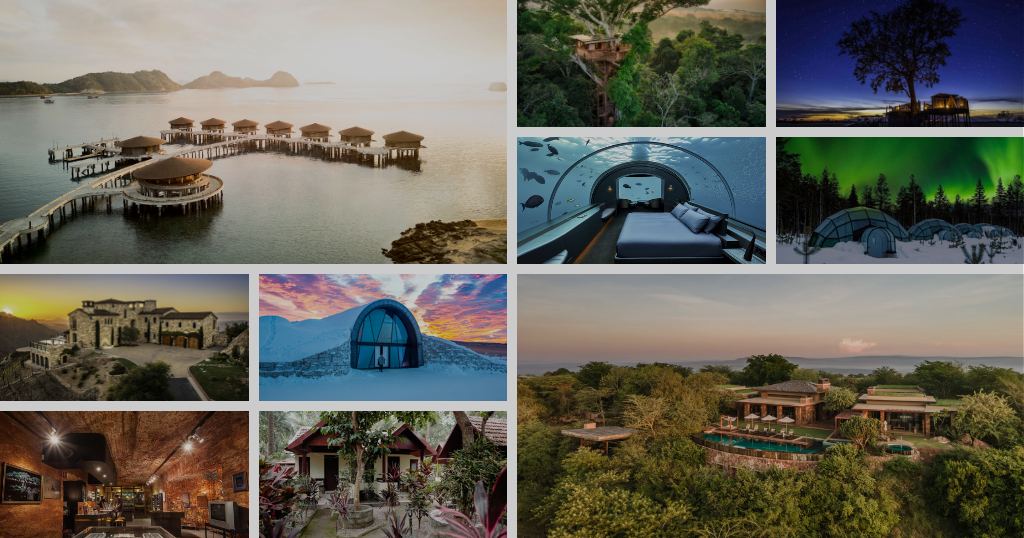
Sleeping in a Glass Igloo
Few accommodation concepts are as closely connected with nighttime travel as the glass igloo.
Designed to offer wide views of the sky while protecting guests from extreme temperatures, these properties have become especially associated with northern Scandinavia.
Their appeal is simple.
Travellers don’t need to search for the night sky.
The night sky comes to them.
You can spend a winter evening inside a warm room while snow surrounds the accommodation.
If conditions are favourable, the Northern Lights may appear overhead.
Even without the aurora, watching snow and stars from bed creates an unusual sense of connection with the environment.
Stargazing from the Mountains
Deserts are not the only exceptional locations for astronomy.
High altitude mountain regions can also provide outstanding conditions.
Reduced light pollution and clearer air can create impressive views of the stars.
Mountain lodges can incorporate stargazing into a wider itinerary involving hiking, wellness and nature.
The contrast between daytime and nighttime becomes part of the appeal.
During the day, travellers see the mountains.
At night, those same mountains become dark silhouettes beneath an enormous sky.
It completely changes the sense of scale.
Why Darkness Makes Travel Feel Different
Nighttime travel has a psychological dimension.
During daylight, people naturally rely heavily on sight.
Darkness changes that.
Sounds become more noticeable. Smells become stronger. Temperature changes become more apparent.
Travellers become more aware of their immediate surroundings.
This can make even relatively simple experiences feel more intense.
A forest walk becomes mysterious. A boat journey becomes peaceful. A desert becomes enormous. A wildlife encounter becomes more dramatic.
Darkness removes some information while heightening attention to what remains.
The Luxury of Silence
Many of the experiences on this list share one characteristic: silence.
Modern life rarely provides genuine silence.
Traffic, phones, conversations, notifications and background noise are almost constant.
Remote travel can temporarily remove them.
Standing in a desert beneath the stars can provide a level of silence that initially feels unfamiliar.
The same can happen in the Arctic, mountains or remote wilderness.
Luxury is often associated with adding things. Better rooms. Better food. More services.
But some of the most powerful forms of luxury come from removing things. Noise. Crowds. Schedules. Distractions.
The result is space to experience where you are simply.
How to Plan an Exceptional Nighttime Journey
Night experiences require different planning from conventional sightseeing.
Timing becomes especially important.
Northern Lights depend on darkness, weather and solar activity. Stargazing requires clear skies and minimal light pollution. Bioluminescence depends on environmental conditions. Wildlife activity varies by habitat and season. The moon can improve some experiences and reduce visibility for others.
Accommodation also matters.
A property that looks spectacular during daylight may not provide easy access to dark sky areas.
Meanwhile, a remote lodge may offer exceptional nighttime experiences directly from the property.
Transportation needs careful consideration too. Travelling through unfamiliar remote environments after dark requires appropriate local expertise.
The strongest itineraries therefore plan nighttime experiences as intentionally as daytime activities.
Why Night Travel Feels So Exclusive
True exclusivity is not always about entering somewhere other people cannot.
Sometimes it is about experiencing a familiar place at an unusual moment.
A beach before sunrise. A city after crowds disappear. A mountain beneath the stars. A desert at midnight.
These experiences feel exclusive because the traveller experiences a different version of the destination.
Uncertainty also plays a role.
Nature does not perform on demand.
Clouds may cover the stars. Wildlife may remain hidden. The aurora may appear briefly and disappear.
When everything aligns, the resulting moment feels earned rather than manufactured.
That unpredictability is increasingly valuable in a world where so much travel can be planned, photographed and previewed before arrival.
Creating a Journey That Continues After Sunset
A beautifully designed itinerary should have rhythm.
Travellers do not need a major nighttime activity every evening.
Doing so could quickly become exhausting.
Instead, use after-dark experiences selectively.
One evening might involve stargazing. Another could be completely free. A third might include a private dinner. Later in the journey, a night safari or sailing experience could become a highlight.
The contrast between active and quiet evenings prevents the itinerary from feeling programmed.
It also ensures that nighttime experiences remain special.
Conclusion: Discovering Another Side of the World
Some of the world’s most extraordinary travel moments begin precisely when conventional sightseeing ends. The Northern Lights can transform an Arctic sky, stars can reveal the true scale of a desert, wildlife can emerge from the darkness, and an ordinary coastline can become unforgettable beneath the moon.
These experiences also reveal something important about modern luxury. Luxury does not always mean adding more. It can mean greater privacy, better access, more time, expert knowledge and the freedom to experience a destination differently.
Travelling after dark encourages us to notice things we might otherwise miss. The sound of wildlife. The movement of stars. The silence of a desert. The reflection of a city across water. The simple pleasure of sitting somewhere extraordinary without rushing to the next attraction.
For travellers who want their journey to continue long after sunset, choosing a Luxury travel and tour operator in India can help bring together the right destinations, seasons, accommodation and carefully timed experiences to reveal an entirely different side of the world.