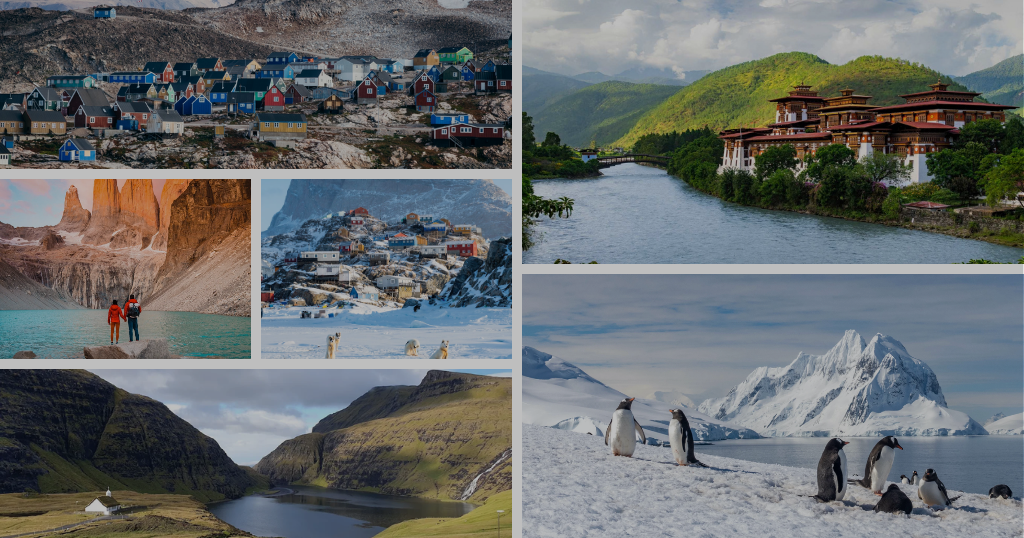
Some journeys begin with a destination. Others begin with a moment: the first cherry blossoms appearing in Japan, thousands of animals moving across the African plains, the Northern Lights dancing above an Arctic landscape or autumn turning an entire forest gold. A Luxury travel and tour operator in India can design journeys around these fleeting events, matching destinations with the seasons when nature is most extraordinary. Instead of asking only where to travel, this approach asks an equally important question: when should you be there?
Nature follows its own calendar.
Whales migrate. Flowers bloom. Rivers rise and fall. Animals follow rainfall. Ice freezes and melts. Forests change colour.
Some of the world’s most remarkable travel experiences therefore exist only for limited periods.
Arrive too early, and the landscape may look completely different.
Arrive too late and the moment may already have passed.
This makes timing one of the most important elements of experiential travel.
So, rather than creating another list of destinations, let us travel through the year itself.
A Year of Natural Phenomena, Month by Month
January: Northern Lights Across the Arctic
January brings deep winter to northern Europe.
Across Arctic regions of Norway, Finland, Sweden and Iceland, long nights create opportunities to search for one of the world’s most famous atmospheric phenomena: the aurora borealis.
The Northern Lights occur when charged particles interact with Earth’s atmosphere, creating colours that can appear to move across the sky.
Photographs often show spectacular green ribbons.
In reality, every display is different.
Some are subtle. Others can transform much of the sky.
Experiencing the Aurora in Comfort
Winter conditions in the Arctic can be severe, but luxury travel lets you experience the environment without sacrificing comfort.
Glass roof cabins can provide views directly from bed.
Remote lodges reduce artificial light.
Private excursions can travel away from towns in search of clearer skies.
The most important ingredient, however, is patience.
The aurora cannot be switched on for visitors.
Cloud cover and natural activity determine what travellers see.
That uncertainty is precisely what makes the experience meaningful.
More Than the Lights
An Arctic itinerary should never depend entirely on seeing the aurora.
Winter landscapes offer plenty to experience during the day.
Snow-covered forests, frozen environments, local culture, saunas, and winter activities can create a complete journey.
Then, if the lights appear at night, they become an extraordinary bonus rather than the holiday’s sole purpose.
February: Ice, Snow and Frozen Landscapes
February continues the northern winter but offers opportunities to experience the season itself as the attraction.
Frozen lakes, snow-covered forests and ice formations transform destinations across Scandinavia, Canada and other northern regions.
Frozen Waterfalls and Ice Formations
Water behaves differently during extreme cold.
Waterfalls can partially freeze. Ice caves may form. Lakes become enormous white landscapes. Glaciers reveal shades of blue hidden during other seasons.
These environments can provide extraordinary photography opportunities.
However, winter landscapes require responsible local guidance.
Ice conditions can change.
Weather can become severe.
Never approach a beautiful location without understanding the environment.
Staying Somewhere Designed for Winter
Winter accommodation can become part of the phenomenon.
Ice hotels, snow structures, and Arctic cabins let travellers experience the season continuously, rather than returning each evening to an environment disconnected from the landscape.
The cold becomes part of the story.
March: Japan’s Cherry Blossom Season Begins
Few seasonal events are as culturally significant as Japan’s cherry blossoms.
Each spring, sakura appear across different regions as temperatures rise.
The flowering period is relatively short, which creates enormous anticipation.
Forecasts are followed closely. Parks fill with people. Families and friends gather beneath the trees.
More Than a Beautiful Flower
Cherry blossoms carry cultural meaning connected with impermanence.
Their beauty is intensified by the knowledge that it will not last.
This makes seeing them in Japan very different from simply visiting a garden filled with flowers.
The experience is connected with the season itself.
Following the Blossom Front
Japan’s geography means blossoms don’t appear everywhere at the same time.
Warmer southern regions generally experience flowering earlier than colder northern areas.
Travellers can therefore plan routes around predicted bloom periods.
Tokyo and Kyoto are obvious choices, but quieter locations can provide equally memorable experiences.
The best itinerary balances famous viewing locations with gardens, neighbourhoods, and countryside where you can experience the season more peacefully.
April: Spring in Full Bloom
April continues the transformation across much of the Northern Hemisphere.
Depending on geography and annual conditions, flowers begin appearing across gardens, countryside and forests.
Japan may still offer cherry blossom opportunities in cooler regions, while Europe moves deeper into spring.
Tulip Season in the Netherlands
The Netherlands becomes particularly colourful during spring.
Tulip fields create enormous blocks of colour across parts of the landscape.
Formal gardens provide another way to experience the season.
But travellers should explore beyond a single famous garden.
Cycling routes and countryside journeys can reveal a broader picture of Dutch spring.
Why Flower Seasons Need Flexible Planning
Flowers do not follow tourism calendars precisely.
Temperature, rainfall and other environmental factors influence bloom periods.
This means travellers should avoid designing an itinerary around one exact day whenever possible.
A wider travel window provides a better chance of experiencing the season while still allowing the destination to remain enjoyable if nature arrives earlier or later than expected.
May: Wildflowers and Europe’s Green Landscapes
By May, much of Europe has moved into late spring.
Mountain valleys become greener. Wildflowers begin appearing. Days become longer.
The intense crowds of peak summer may not yet have arrived in many regions.
This creates excellent conditions for nature-based journeys.
Alpine Spring
Lower elevation areas across the Alps can become particularly beautiful.
Snow may remain visible on higher peaks while valleys turn green.
The contrast creates spectacular scenery.
Travellers interested in hiking need to consider elevation carefully, as some higher routes may remain inaccessible.
But scenic drives, lower trails and mountain villages can provide rewarding experiences.
Mediterranean Landscapes Before Summer
May can also be a wonderful time to explore parts of the Mediterranean.
Vegetation remains greener than during the height of summer.
Temperatures can be more comfortable for walking and cultural exploration.
You can therefore combine nature and history in the same itinerary.
June: The Midnight Sun
As summer approaches its peak in the Northern Hemisphere, the Arctic experiences one of its most unusual natural phenomena.
The sun may remain visible for extremely long periods.
Above certain latitudes, it may not set at all for days or weeks.
This is the midnight sun.
When Night Disappears
The experience can be surprisingly disorienting.
Travellers may finish dinner and discover the landscape still illuminated as though it were afternoon.
The extended daylight changes the rhythm of travel.
Hikes can begin later. Photography can continue long into the evening. Boat journeys can take place at hours that would normally be dark.
The pressure to finish sightseeing before sunset disappears.
Where to Experience It
Northern Norway is one of the most attractive options, combining mountains, fjords and coastal landscapes.
Other northern regions of Scandinavia, Iceland and Arctic territories provide their own versions.
The midnight sun is not simply something to look at.
It changes how travellers experience time.
July: Wildlife in East Africa
July marks an important period for wildlife travel in parts of East Africa.
Seasonal movements of animals across the Serengeti and Maasai Mara ecosystem form part of the Great Migration, one of the world’s most famous wildlife spectacles.
Huge numbers of wildebeest, along with zebra and other animals, move through the ecosystem in response to grazing and water conditions.
Understanding the Migration
The migration is not a single event occurring on one predetermined date.
It is a continuous natural cycle.
Rainfall influences movement.
Animals do not follow hotel reservations.
This means responsible safari planning requires understanding seasonal patterns rather than promising guaranteed sightings.
The Drama of River Crossings
River crossings have become among the most photographed parts of the migration.
They can be dramatic.
But travellers should remember that wildlife experiences are unpredictable.
Waiting may be necessary.
Nothing may happen immediately.
That unpredictability is what separates genuine wildlife travel from staged entertainment.
Luxury Safari Camps
Seasonally positioned camps and well-located lodges can provide access to different areas of the ecosystem.
Private guiding allows travellers to spend more time observing behaviour rather than rushing between sightings.
The finest safari experience is not necessarily the one that sees the most animals.
It is the one that develops a deeper understanding of the landscape.
August: Whale Encounters and Ocean Migration
The world’s oceans have their own seasonal rhythms.
Different whale species migrate enormous distances between feeding and breeding grounds.
This creates opportunities for responsible marine wildlife experiences across multiple regions.
Why Whales Migrate
Many whale species travel between nutrient-rich feeding areas and warmer breeding waters.
The exact timing depends on species and location.
Travellers can therefore plan ocean journeys around particular migration periods.
Responsible Whale Watching
The quality of a whale watching experience depends heavily on how it is conducted.
Boats should maintain appropriate distances.
Boats should not chase or surround animals.
Noise should be controlled where possible.
Experienced naturalists can add enormous value by explaining behaviour and biology.
The goal should be observation, not interference.
The Emotional Scale of the Ocean
Seeing a whale in an aquarium or documentary cannot fully communicate its scale.
Watching one surface beside an open horizon creates a completely different emotional response.
The ocean suddenly feels much larger.
And humans feel much smaller.
September: Autumn Begins to Transform the North
September marks the beginning of one of nature’s most visually dramatic transformations.
Across parts of the Northern Hemisphere, trees begin changing colour.
Green landscapes gradually turn yellow, orange and red.
Canada and New England
North America’s forests are particularly famous for autumn colour.
Regions of Canada and the northeastern United States can provide extraordinary road journeys during the season.
Lakes reflect the changing forests.
Mountain landscapes become more colourful.
Small towns provide atmospheric stops along the way.
Why Timing Is Difficult
Peak autumn colour depends on temperature, elevation, latitude and local weather.
Even within one region, different areas can reach peak colour at different times.
This makes road-based journeys particularly effective.
Travellers can adjust routes depending on conditions rather than relying on one fixed viewpoint.
October: Autumn at Its Most Dramatic
October extends autumn across many regions and can provide some of the year’s most beautiful travel conditions.
Forests across Europe, North America and parts of Asia transform dramatically.
European Autumn
Countries with forested mountain regions can be particularly attractive.
Slovenia, Austria, Germany and parts of Eastern Europe provide opportunities to combine foliage with historic towns and countryside.
Vineyard regions also become interesting during harvest periods.
Food and wine can therefore complement the natural scenery.
Autumn in the Mountains
Mountains create additional variation because elevation influences seasonal change.
Higher areas may experience autumn earlier.
Lower valleys can remain colourful later.
This creates layered landscapes where several stages of the season may be visible simultaneously.
November: Japan’s Autumn Colours
Japan is famous internationally for spring blossoms, but its autumn season can be equally beautiful.
Maple trees transform temples, gardens and mountain landscapes into shades of red and orange.
Kyoto becomes particularly atmospheric.
Traditional architecture surrounded by autumn foliage creates scenes that feel almost carefully designed, even though they’re seasonal.
A Different Japan
Travellers who have already visited during spring may find autumn reveals a completely different personality.
Temperatures can be pleasant.
Food changes with the season.
Gardens take on new colours.
Mountain regions provide additional opportunities for nature-based travel.
This demonstrates how returning to the same country at another time of year can create an entirely new journey.
December: Antarctica’s Summer Wilderness
As winter begins across Europe and North America, the Southern Hemisphere enters summer.
This makes December a key time to travel to Antarctica.
The continent remains extreme, but summer provides the conditions necessary for most visitor expeditions.
Entering Another World
Antarctica does not resemble conventional tourism.
There are no historic city centres. No luxury shopping streets. No traditional hotel districts.
Instead, travellers encounter ice, ocean, mountains and wildlife.
The scale is hard to grasp until you experience it firsthand.
Wildlife and Ice
Penguin colonies, seabirds and marine wildlife contribute to the experience.
Enormous icebergs create constantly changing scenery.
Light behaves differently at high southern latitudes.
The landscape feels both minimal and overwhelming.
Expedition Luxury
Modern expedition vessels can provide sophisticated accommodation, dining and expert guidance.
But comfort should never distract from the journey’s purpose.
The vessel is a base.
Antarctica remains the destination.
Planning a Journey Around Nature’s Calendar
Beyond the Calendar: Nature Does Not Read Dates
A travel calendar is useful, but nature doesn’t operate on exact human schedules.
Cherry blossoms may arrive earlier after a warm winter.
Rainfall can alter wildlife movement.
Clouds can hide the Northern Lights.
Autumn colours may peak at unexpected times.
Whale migrations can vary.
Don’t treat this uncertainty as a problem.
It is a defining characteristic of natural travel.
When an experience cannot be guaranteed, witnessing it becomes more valuable.
The Great Migration: A Journey Rather Than an Event
The Great Migration deserves particular attention because it is often misunderstood.
Travellers sometimes imagine millions of animals moving together in one dramatic procession.
In reality, the movement occurs across a vast ecosystem over many months.
Different stages provide different experiences.
Calving periods. Movement across grasslands. Predator activity. River crossings. Seasonal transitions.
This means there is not necessarily one universally “best” time.
The right period depends on what the traveller hopes to experience.
The Northern Lights Versus the Southern Lights
The aurora borealis receives most international attention, but the Southern Hemisphere has its own equivalent.
Aurora australis, or the Southern Lights, occurs around southern polar regions.
Viewing opportunities can be more geographically challenging because fewer populated areas sit at ideal southern latitudes.
Parts of Tasmania and New Zealand may occasionally provide opportunities under suitable conditions, while Antarctica lies much deeper within the auroral zone.
For travellers who enjoy rare natural phenomena, the Southern Lights provide an intriguing alternative.
Solar Eclipses: The Ultimate Time-Sensitive Journey
Few natural events demonstrate the importance of timing better than a total solar eclipse.
A traveller can stand in one location and watch daylight change dramatically as the Moon passes between Earth and the Sun.
But totality is visible only within a relatively narrow geographical path.
This means eclipse travel requires precise planning.
Accommodation in favourable locations may become limited well in advance.
Weather introduces another uncertainty.
Even perfect geographical positioning cannot guarantee clear skies.
Yet when everything aligns, the experience can be extraordinary.
The temporary darkness, changing temperature and unusual atmosphere create a moment that feels completely unlike ordinary travel.
Bioluminescence: When the Ocean Glows
Certain marine organisms can produce light through biological processes.
When conditions are right, movement in the water can create glowing blue effects.
A paddle stroke may illuminate.
A wave may sparkle.
Swimming movement can sometimes create trails of light where permitted and environmentally appropriate.
Bioluminescent environments occur in several parts of the world, but conditions vary significantly.
Moonlight, water quality and organism concentration can influence visibility.
Responsible travel is essential because these ecosystems can be sensitive.
The experience should always prioritise environmental protection over photographs.
Desert Blooms: Life Appearing From Dry Landscapes
Deserts appear permanent.
But after unusual rainfall, some desert regions can temporarily transform.
Seeds that have remained dormant can germinate.
Flowers spread across landscapes normally associated with sand and rock.
These events can be difficult to predict.
That unpredictability makes them particularly fascinating.
Chile’s Atacama Desert is one region associated with occasional flowering events under suitable conditions.
Travellers interested in these phenomena need to be flexible.
Unlike annual festivals, nature provides no fixed opening date.
Turtle Nesting and Hatching
Sea turtles provide another extraordinary seasonal wildlife experience.
Different species return to beaches worldwide to nest.
Weeks later, hatchlings may emerge and move toward the ocean.
These moments can be emotionally powerful, but they require careful tourism practices.
Artificial light can disturb turtles.
Crowds can create stress.
Physical interference can be harmful.
Responsible conservation programmes and trained guides are therefore essential.
Wildlife travel should never prioritise visitor convenience over animal welfare.
Flamingo Gatherings
Large concentrations of flamingos can turn lakes into enormous pink expanses.
Different regions experience seasonal gatherings depending on water conditions, food availability and breeding cycles.
East Africa and parts of South America provide notable examples.
From a distance, thousands of birds can appear almost like a moving colour across the landscape.
The experience becomes even more impressive when travellers understand the environmental conditions that support these populations.
Again, knowledgeable naturalists can transform observation into education.
Autumn Versus Spring: Two Different Ways to Travel
Spring and autumn demonstrate opposite forms of natural transformation.
Spring represents emergence.
Flowers appear. Trees regain leaves. Wildlife activity increases. Days become longer.
Autumn represents transition.
Leaves change colour. Temperatures fall. Landscapes prepare for winter.
Both can produce spectacular travel experiences.
Choosing between them depends on the mood travellers want.
Spring feels energetic.
Autumn often feels slower and more atmospheric.
Neither is universally better.
Why Photography Changes Seasonal Travel
Natural phenomena attract photographers for obvious reasons.
But photography can also change how travellers experience them.
Waiting for light encourages observation.
A photographer notices clouds. Wind direction. Reflections. Movement. Colour.
This slower attention can deepen appreciation of a destination.
However, photography should never become more important than the experience itself.
Sometimes the best decision is to put the camera down.
A Northern Lights display does not need to become 300 photographs.
Watching it can be enough.
The Importance of Local Knowledge
Natural phenomena require understanding.
A local guide may know where wildlife has recently been active.
An astronomer can explain what travellers are seeing in the night sky.
A naturalist can interpret migration behaviour.
A mountain guide understands seasonal trail conditions.
Local expertise therefore becomes particularly valuable when the itinerary depends on nature.
It reduces unnecessary travel and helps travellers respond when conditions change.
In this context, luxury means access to knowledge.
Building Flexibility Into the Itinerary
A rigid itinerary can be the enemy of natural travel.
Imagine scheduling one evening for the Northern Lights.
Clouds arrive.
The opportunity disappears.
A better approach might allow several evenings in the region.
The same principle applies to wildlife and seasonal landscapes.
Flexibility increases the probability of meaningful experiences.
It also reduces disappointment.
Travellers can enjoy the destination rather than feeling that the holiday succeeds or fails based on one event.
The Luxury of Waiting
Modern life is built around efficiency.
Food arrives quickly. Information appears instantly. Transportation becomes faster.
Waiting is treated as wasted time.
Nature operates differently.
A safari may involve sitting quietly for an hour.
Aurora travellers may spend several evenings watching the sky.
Wildlife photographers can wait all morning for a single moment.
Whale watching involves scanning an enormous ocean.
This waiting can initially feel strange.
Then something changes.
Travellers begin noticing the environment.
They listen.
They observe.
And when the moment finally arrives, it feels far more valuable because it was never guaranteed.
Sustainable Travel and Natural Phenomena
Popular natural events can attract large numbers of visitors.
This creates challenges.
Vehicles may crowd wildlife.
Visitors can damage flowering landscapes.
Boats can disturb marine animals.
Artificial light can affect nesting species.
Fragile environments can suffer under excessive tourism.
Responsible travel therefore matters enormously.
Travellers should follow local regulations and maintain appropriate distances from wildlife.
Smaller group experiences can reduce pressure.
Visiting outside the busiest periods can sometimes create a better experience while supporting more balanced tourism.
The objective should always be to witness nature without damaging it.
How to Build Your Own Natural Phenomena Calendar
Begin with the experiences that genuinely interest you.
Do you dream of wildlife? Astronomy? Flowers? Snow? Ocean experiences? Autumn landscapes?
Then identify several destinations where the phenomenon occurs.
This provides alternatives.
Next, understand the timing window.
Avoid focusing on one exact day unless the event itself is astronomically fixed, such as an eclipse.
Build additional experiences around the natural highlight.
If travelling for cherry blossoms, include food and culture.
If visiting the Arctic for aurora, explore winter landscapes.
If travelling for wildlife migration, learn about the wider ecosystem.
This ensures the journey remains rewarding even when nature changes the plan.
Why Timing Can Matter More Than Destination
Two travellers can visit exactly the same location and experience completely different journeys.
One sees a green forest.
The other arrives three months later and sees the same trees covered in red and gold.
One visits an Arctic landscape under constant summer daylight.
Another experiences it beneath winter darkness and aurora.
One travels through East Africa during one stage of wildlife movement.
Another arrives during a completely different part of the cycle.
The destination has not changed.
The timing has.
That is why seasonal planning can be as important as choosing where to travel.
Conclusion: Travel When the World Comes Alive
The greatest natural phenomena remind us that the world is never static. Animals move across continents, oceans change with migration, forests transform with temperature, flowers appear for only a few weeks, and the sky itself can suddenly become the greatest attraction.
Travelling around these moments creates a different relationship with a destination. Instead of expecting nature to adapt to an itinerary, travellers adapt their itinerary to nature.
That shift encourages patience, curiosity and respect. It also creates experiences that feel genuinely rare because they cannot simply be recreated whenever convenient.
A year could begin beneath the Northern Lights, move through spring blossoms, continue beneath the midnight sun, follow wildlife across Africa, watch autumn transform forests and finish among Antarctica’s ice.
For travellers ready to let nature decide where the next journey leads, a Luxury travel and tour operator in India can combine seasonal knowledge, specialist experiences and carefully timed itineraries to help place you in the right part of the world when something extraordinary begins.