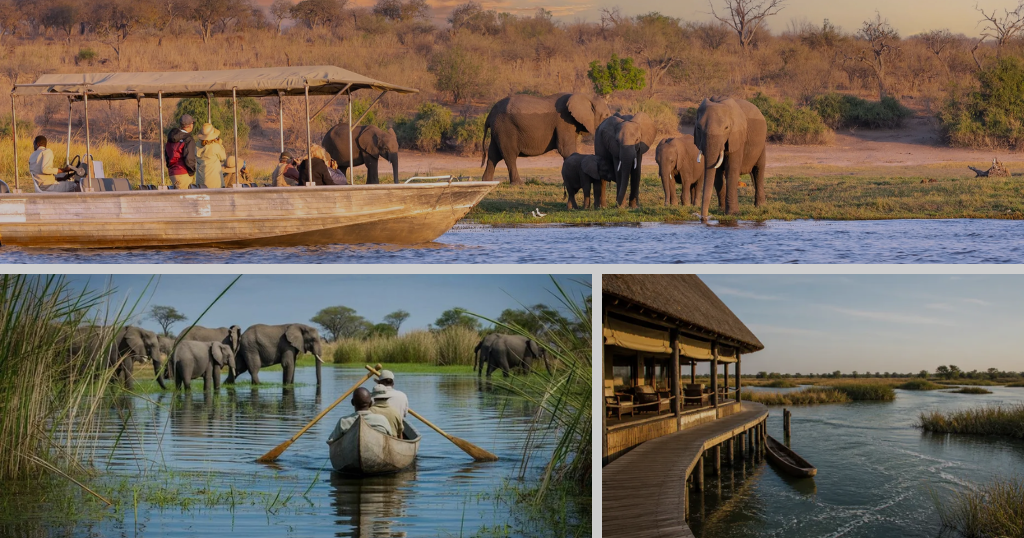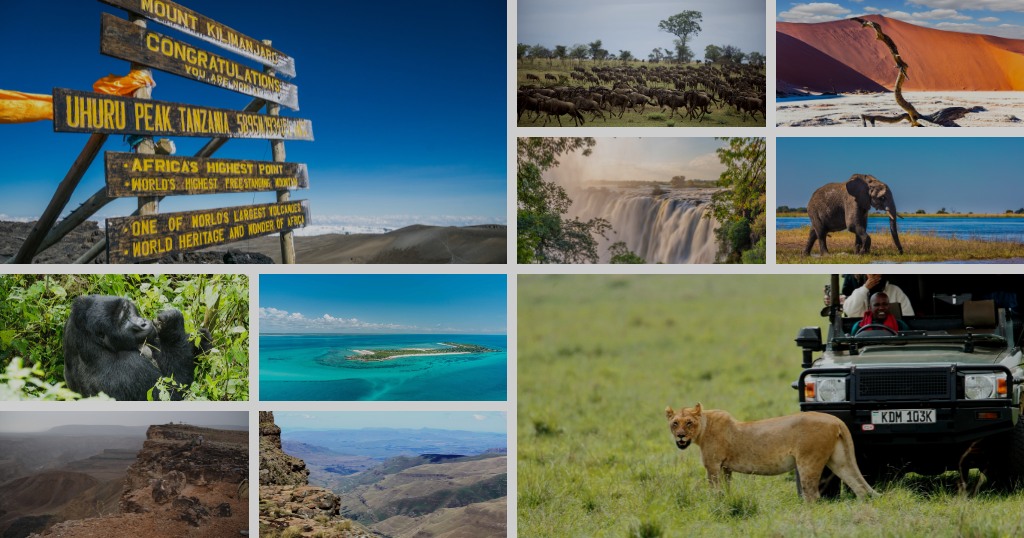
Close to two million wildebeest, zebra and gazelle move across the plains of East Africa in a loop that has repeated itself for longer than anyone has been keeping records. For travellers planning a luxury safari from India, the timing of this journey, not the destination alone, is usually what separates a good trip from an extraordinary one. As a luxury travel and tour operator in India specialising in luxury trips to Africa, we also hear the same question from our specialists more than any other: when should I go to see the Great Migration?
This guide is built to answer that properly. It walks through the migration’s yearly rhythm, honestly weighs Kenya against Tanzania, points to the camps worth the premium, and ends with a sample itinerary structured the way we actually plan trips for our guests. Whether you’re weighing a Masai Mara safari against a Serengeti circuit, or want to know which month justifies the investment of a long-haul luxury holiday, keep this open while you plan.
What Is the Great Migration?
The Great Migration is the continuous, circular movement of around 1.5 million wildebeest, along with several hundred thousand zebras and gazelles, across the Serengeti-Mara ecosystem, spanning northern Tanzania and southern Kenya. It isn’t a single event with a fixed start and end date; it’s a year-round cycle driven almost entirely by rainfall. Grass grows where rain falls, and the herds follow it, which means the migration technically happens every day of the year, just in different places.
The loop broadly runs like this: calving on the short-grass plains of the southern Serengeti between January and March, a push north-west through the Western Corridor around April and May, a gathering in the north through June and July, and the famous river crossings between roughly July and October, before the herds turn south again as the short rains return.
No two years play out identically, which is exactly why the Serengeti’s status as a UNESCO World Heritage Site matters in practical terms, not just symbolically — the designation exists specifically because of this migration, and conservation bodies track it year-round. Working with a specialist who follows the herds each season matters more than picking a month off a generic chart.
Why It’s Called Nature’s Greatest Show
Scale is the first reason. No other terrestrial wildlife event on Earth involves this many large mammals moving as one; the sheer number visible in a single sweep of binoculars is something photographs rarely prepare visitors for. But scale alone wouldn’t earn the title. What makes it theatre is tension. Predators know the migration calendar as well as any safari guide, and crocodiles, lions and hyenas time their own year around it. The river crossings compress days of anticipation into a few chaotic minutes, thousands of wildebeest committing to a crossing at once, with current, crocodiles, and instinct working against them. Add the backdrop of golden Serengeti plains, the Mara’s acacia-studded hills, dust lit low by an equatorial sun, and it’s easy to see why seasoned safari guides, not just marketing copy, reach for the phrase ‘greatest show on Earth.
The Great Migration Calendar, Month by Month
The migration’s route shifts gradually, but it helps to think of the year in five broad phases.
January – March: Calving Season, Southern Serengeti
Around 500,000 wildebeest calves are born within a few short weeks on the Ndutu plains and southern Serengeti, drawing predators in large numbers. Crowds are thinner than in the northern crossing season, and the open plains make for exceptional big-cat sightings.
April – May: The Long Rains and the Western Corridor
The herds move north-west through the Western Corridor as the long rains green the landscape. Camps here are quieter and often more affordable, though the rains can make some roads harder going.
June – July: Grumeti River and the Push North
As the Western Corridor’s grazing thins out, the herds face their first serious river crossing at the Grumeti, where some of Africa’s largest Nile crocodiles wait. This is a strong, less-crowded preview of what’s to come at the Mara.
August – October: The Mara River Crossings
This is peak season — the herds cross and re-cross the Mara River as they move between Tanzania’s northern Serengeti and Kenya’s Masai Mara. Crossings can happen at any hour and aren’t guaranteed on any given day, but this window offers the best odds of witnessing one.
November – December: The Return South
Short rains draw the herds back south through the eastern Serengeti, setting up the next calving season. Game viewing stays excellent, with far fewer vehicles at the classic viewpoints.
Best Time to Visit
There isn’t a single ‘correct’ month; there’s a correct month for what you want to see. August and September offer the strongest odds of a Mara River crossing, but they’re also the busiest and priciest months, and premium camps near the crossing points sell out six to twelve months ahead.
January to March rewards travellers with newborn calves, dramatic predator action, and noticeably lower rates and crowds; it’s the window our more discerning guests, especially repeat safari travellers, often prefer. If your priority is the river-crossing spectacle specifically, book early and build in at least three nights near the crossing zones — one night is rarely enough, since crossings can’t be timed precisely.
Kenya vs Tanzania: Which Offers the Better Experience?
Neither is objectively better; they suit different trips. Tanzania’s Serengeti is vast, covering roughly eight times the area of Kenya’s Masai Mara, which means more space, longer game drives, and a stronger sense of wilderness. It also hosts the calving season and the Grumeti crossings entirely within its borders.
Kenya’s Masai Mara is smaller but easier to combine with a shorter trip, and its private conservancies Mara North, Naboisho and Olare Motorogi among them — cap vehicle numbers strictly, which means far less congestion at sightings than the main reserve sees in peak season.
For Indian travellers, Kenya also has a practical edge: Nairobi is reachable on direct flights from several Indian cities, while Tanzania’s safari circuit typically routes through Kilimanjaro or Arusha with a connection. Many of our best-received itineraries combine both countries in a single trip, following the herds across the border rather than picking one side.
Where to Witness the Mara River Crossings
On the Tanzanian side, the northern Serengeti around the Kogatende area offers front-row access to crossings from June through October, with fewer vehicles than the more famous Kenyan bank. In Kenya, the Mara Triangle and the conservancies bordering the main reserve, particularly around the Sand River and Lookout Point, are the classic vantage points, especially from August to September. Staying inside a private conservancy rather than the public reserve typically means smaller groups, off-road driving privileges, and a considerably calmer crossing experience.
Wildlife You’ll Encounter Beyond the Migration
The Serengeti-Mara ecosystem supports some of Africa’s healthiest predator populations year-round; lions, leopards, cheetahs, and spotted hyenas are sighted regularly regardless of where the herds happen to be. Add the Ngorongoro Crater for a dense Big Five circuit, over 500 recorded bird species, and resident giraffe, elephant and buffalo populations that never leave the region, and it’s clear the migration is the headline act, not the entire show.
Choosing the Right Safari Experience
The right format depends on who’s travelling. Honeymooners often do best with a small, intimate camp and private game drives; families benefit from lodges with interconnecting suites and flexible drive timings for younger children; serious photographers should prioritise camps with dedicated photographic hides and vehicles fitted with beanbags or gimbals.
Fly-in safaris save time and suit shorter trips, while road safaris allow for a slower, more immersive pace across multiple parks. Private conservancies generally cost more but deliver a materially quieter, more personal experience than the busier national reserves, worth the premium for most luxury travellers.
This is also where an experienced luxury travel and tour operator in India earns its fee, rather than booking directly with individual camps. A specialist based here sequences visas, connecting flights, rupee-based payments and yellow fever documentation into one itinerary, and can shift camps quickly if availability changes closer to your dates, harder to manage across time zones alone.
Luxury Safari Lodges & Camps
A handful of properties consistently define the luxury end of this circuit. Singita’s Serengeti and Grumeti properties pair architecture-forward design with some of the region’s most exclusive private land. andBeyond runs several of the ecosystem’s best-known camps, including options positioned directly along migration routes.
Angama Mara sits on the edge of the Oloololo Escarpment with sweeping views across the entire Mara Triangle. Mahali Mzuri, in the Maasai Mara National Reserve, offers a smaller, design-led tented experience with strict vehicle limits.
For travellers wanting a single iconic stay, the Four Seasons Safari Lodge Serengeti combines five-star infrastructure with a genuine bush setting. Our specialists match specific camps to specific migration months, since a superb camp in the wrong location during the wrong week can mean missing the crossings entirely.
Photography Tips
Early morning and late afternoon light remains the most flattering for wildlife photography, and it’s also when animals are most active. A telephoto lens in the 100–400mm range covers most safari situations, while a beanbag steadies shots far better than a tripod in a moving vehicle.
For river crossings specifically, patience matters more than gear; herds can gather at a crossing point for hours before committing, so position early and resist the urge to move on. Shooting in burst mode during the crossing itself, rather than single frames, dramatically improves your odds of capturing the moment cleanly.
Packing Checklist
- Neutral-toned clothing (khaki, olive, sand) — avoid bright colours and pure white
- A warm layer for early-morning game drives, even in the dry season
- Broad-brimmed hat, high-SPF sunscreen, and polarised sunglasses
- Binoculars — ideally one pair per person, not shared
- A dust-proof camera bag and spare memory cards or batteries
- Comfortable, closed walking shoes for bush walks and camp transfers
- Malaria prophylaxis and a basic personal medical kit, on your doctor’s advice
Responsible Safari Travel
The scale of the migration can create a false impression that individual choices don’t matter; they do. Favour camps and conservancies with genuine community partnerships and verifiable conservation fees, since these directly fund anti-poaching and habitat protection in the wider ecosystem.
Keep a respectful distance during crossings and never pressure a guide to approach closer than local guidelines allow; overcrowding at crossing points has become a documented stressor for the herds. Choosing a lower-impact camp over a larger one, and travelling in shoulder months where possible, both help protect the very spectacle you’ve come to see.
Sample 8-Day Luxury Safari Itinerary
A route we build often for first-time migration travellers, timed for the July–October crossing season:
- Day 1–2: Arrive Nairobi, connect to a private conservancy bordering the Masai Mara; settle in with an afternoon game drive
- Day 3–4: Full days in the Mara Triangle and surrounding conservancies, tracking herd movement toward the river
- Day 5: Fly to the northern Serengeti (Kogatende) for a change of perspective on the same migration
- Day 6–7: Dedicated crossing-point mornings, with afternoons for predator tracking and a Ngorongoro Crater day trip
- Day 8: Fly to Arusha or Kilimanjaro for onward connections home
Frequently Asked Questions
When is the best time to see the Mara River crossings?
Late July through September offers the strongest odds, though crossings have been recorded into October in some years.
Is the Great Migration guaranteed on any given safari?
No single day or crossing can be guaranteed; it’s a wild, weather-driven event. Staying three or more nights near the crossing zones significantly improves your chances.
How many days should a Great Migration safari include?
Seven to nine days allow time to visit at least two locations without feeling rushed, which matters given how unpredictable herd positions can be.
Is Kenya or Tanzania better for a first safari?
Both work well; Kenya suits shorter trips with direct flights from India, while Tanzania suits travellers seeking a longer, more expansive circuit.
What’s the ideal group size for a luxury safari vehicle?
Four to six guests per vehicle is standard at premium camps, with private vehicles available for photographers or families who prefer full control over timing.
Conclusion
The Great Migration rewards travellers who plan around it rather than simply visiting nearby. The right month, the right side of the border, and the right camp all compound into a materially different experience the difference between a safari that includes wildlife and one built specifically around the single greatest wildlife event on the planet. Get the timing right, and the rest of the trip tends to fall into place.